What Is Diastasis Recti?
An RN's Guide to Understanding Abdominal Separation After Pregnancy
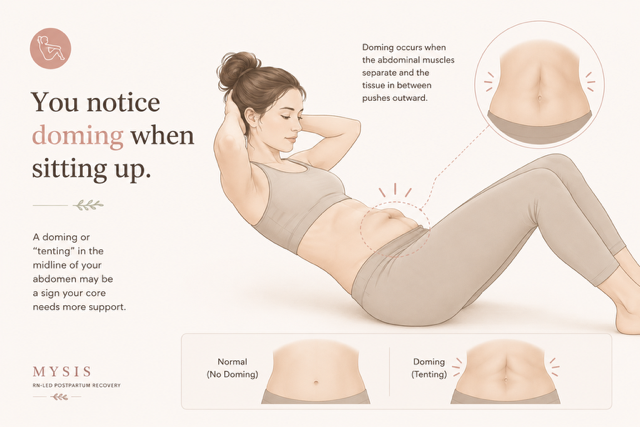
Many mothers notice that their tummy still looks pregnant weeks or even months after giving birth. Others may notice a ridge or “doming” when sitting up or getting out of bed.
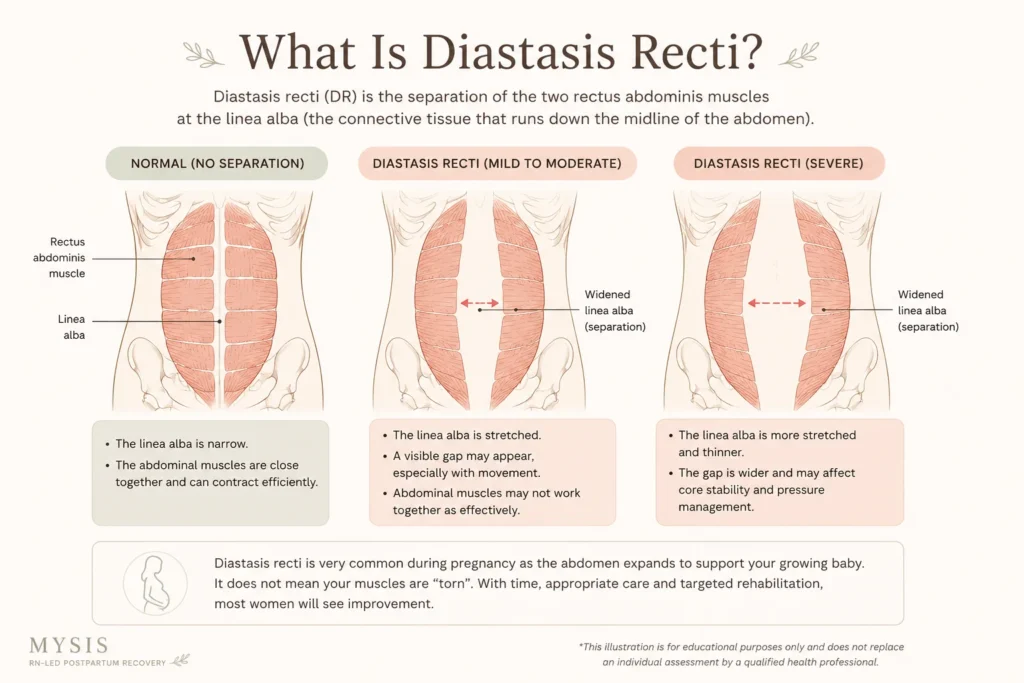
One common reason is Diastasis Recti, also known as abdominal separation.
Diastasis Recti is a natural stretching of the connective tissue (linea alba) between the two sides of your abdominal muscles during pregnancy. It does not mean your muscles have “torn apart” or that something has gone wrong.
For many women, this separation gradually improves after birth. Others may benefit from additional rehabilitation and support.
Does Every Mum Have Diastasis Recti?
One of the biggest misconceptions is that only some women develop Diastasis Recti.
In reality, most women develop some degree of abdominal separation during the later stages of pregnancy. This is a normal adaptation that allows the abdomen to expand as your baby grows.
However, not every mother continues to have Diastasis Recti after giving birth.
Many women experience gradual improvement during the first few months postpartum as the abdominal wall begins to recover.
Rather than simply asking:
“Do I have Diastasis Recti?”
A more useful question is:
“How well is my abdominal wall recovering?”
Will Diastasis Recti Heal by Itself?
The answer is:
Sometimes.
Many women notice improvement during the first few months after giving birth without specific treatment.
However, recovery varies from one person to another.
Several factors may influence recovery, including:
- The amount of abdominal separation
- The quality of the connective tissue (linea alba)
- Your breathing pattern
- Deep core muscle function
- Previous pregnancies
- Daily movement habits
- Overall postpartum recovery
Some mothers recover naturally, while others may benefit from a structured rehabilitation programme.
What Happens If Diastasis Recti Is Left Unaddressed?
Diastasis Recti does not always require intensive treatment.
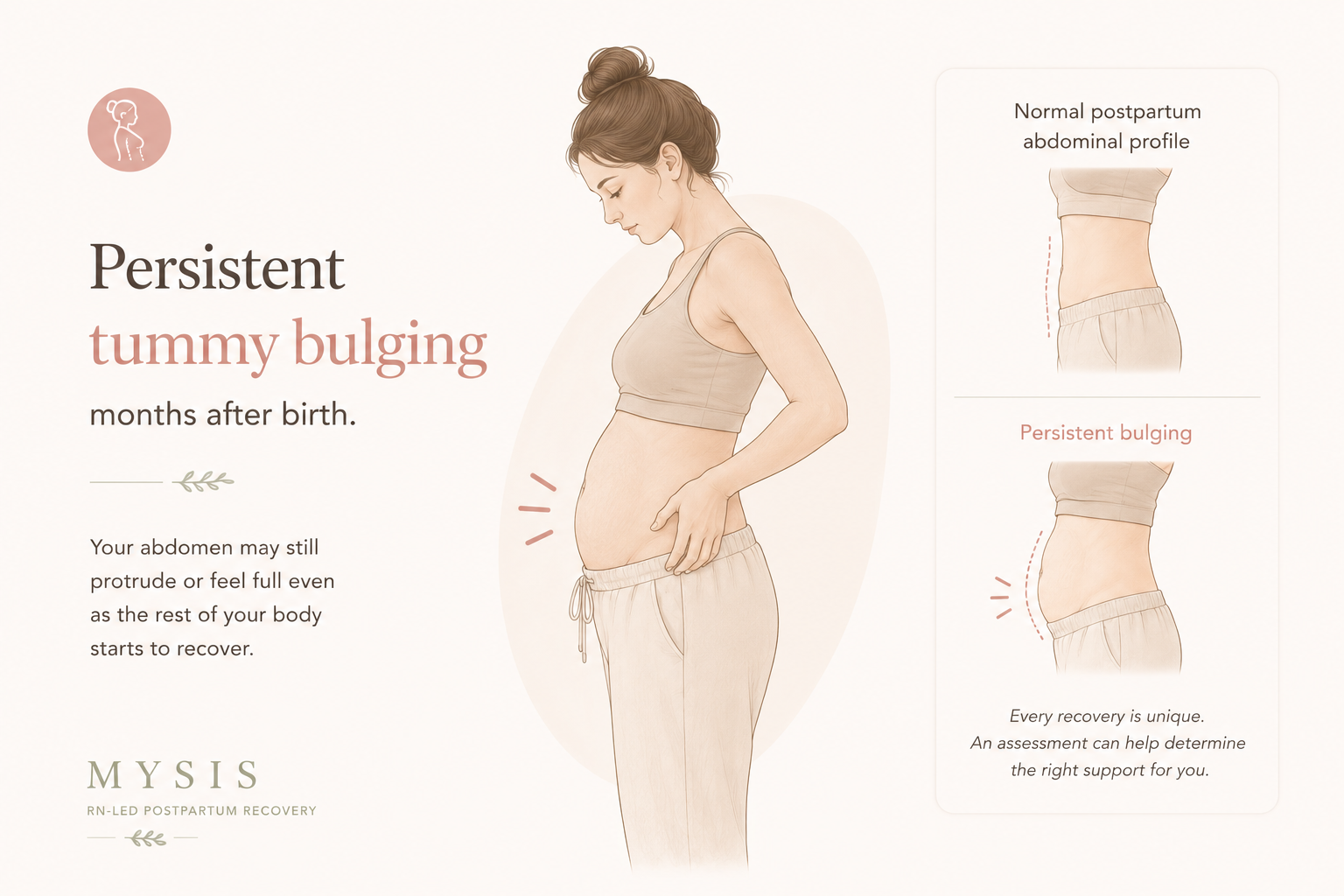
However, if abdominal function does not recover well, some mothers may continue experiencing:
- Difficulty generating abdominal support during everyday activities.
- Persistent abdominal bulging, even months after giving birth.
- Reduced core stability when lifting, carrying or exercising.
- Poor pressure management during movement.
- Feeling that their abdomen never fully regains its previous function.
For some mothers, these changes may affect confidence, exercise and daily comfort.
The earlier appropriate rehabilitation begins, the easier it is to rebuild healthy movement patterns.
How Can Diastasis Recti Improve?
Recovery is usually not about finding one “best” treatment.
Instead, postpartum rehabilitation often involves combining several approaches to improve abdominal function over time.
360° Breathing
360° breathing helps improve pressure management inside the abdomen and is commonly included as part of postpartum rehabilitation programmes.
Deep Core Muscle Training
Learning to activate the deep abdominal muscles (including the transverse abdominis) may help improve abdominal support and control during everyday movement.
Progressive Exercise
Appropriately progressed strengthening exercises may improve abdominal function over time.
Your exercise programme should match your stage of postpartum recovery.
Belly Binding
Traditional belly binding provides external support to the abdominal wall during recovery.
While it is not designed to close Diastasis Recti, many mothers report feeling more supported and confident during everyday activities when it is combined with appropriate rehabilitation.
Frequently Asked Questions
Is Diastasis Recti painful?
Diastasis Recti itself is not usually painful. However, some mothers describe feelings of reduced abdominal support, weakness or difficulty controlling their core during movement.
Can Diastasis Recti heal years after giving birth?
Yes. Many women continue improving their abdominal function months or even years postpartum with appropriate rehabilitation and exercise.
Will I Need Surgery for Diastasis Recti?
Most mothers do not require surgery.
For the majority of women, postpartum rehabilitation, appropriate exercise and time are the first-line approaches.
Surgery is generally considered only for selected cases after assessment by an appropriate medical specialist.
Can Belly Binding Help My Diastasis Recti Recover?
When combined with appropriate rehabilitation, many mothers find that belly binding provides additional abdominal support during daily activities.
This additional support may help some mothers feel more confident when practising breathing exercises, activating their deep core muscles and returning to everyday movement.
For this reason, belly binding is often used as part of a broader postpartum recovery plan, rather than as the only treatment.
Looking for Personalised Postpartum Recovery?
Every mother’s recovery journey is different.
At Mysis, we combine traditional belly binding with RN-led postpartum assessment to support your recovery based on your individual needs.
* Individual results may vary and do not replace medical advice.