How Do I Know If I Have Diastasis Recti?
Many mothers notice that their tummy still looks pregnant months after giving birth and start wondering whether Diastasis Recti may be involved.
Diastasis Recti is a common postpartum condition where the abdominal muscles separate along the midline of the abdomen. While some separation is a normal part of pregnancy, recovery can vary from person to person.
In this guide, we’ll explain some common signs of Diastasis Recti, how you can perform a simple self-check at home, and when a professional assessment may be helpful.
What Is Diastasis Recti?
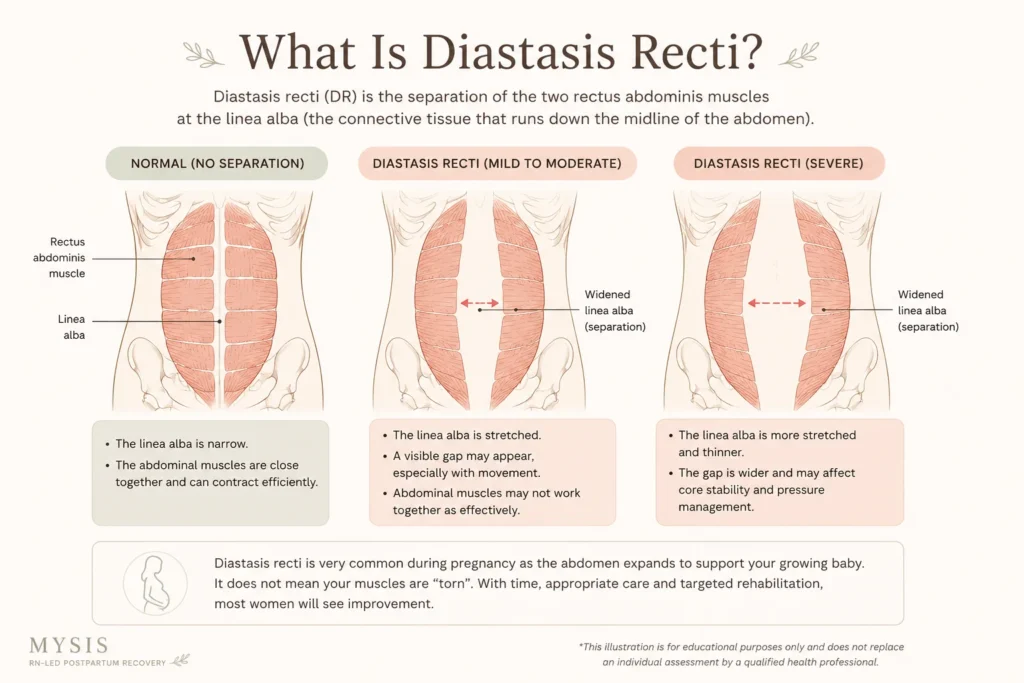
Diastasis Recti (DR) refers to the stretching and widening of the connective tissue between the left and right sides of the abdominal muscles.
During pregnancy, the growing baby places increasing pressure on the abdominal wall. As the abdomen expands, the muscles may gradually separate to accommodate the growing uterus.
Some degree of separation is extremely common during pregnancy and immediately after birth.
Common Signs Of Diastasis Recti
Not every mother experiences the same symptoms. However, some common signs may include:
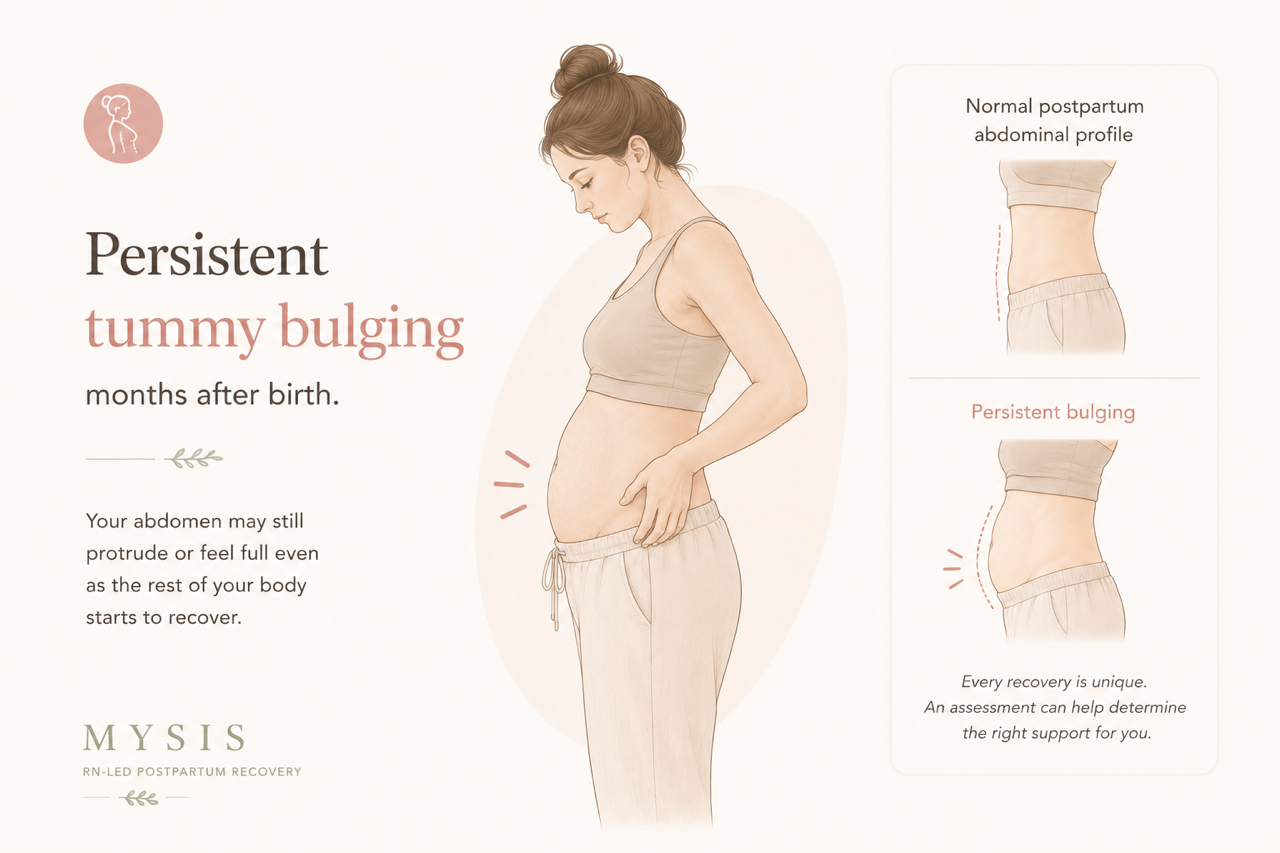
✓ Your tummy still bulges months after birth
✓ You notice doming or a ridge appearing when sitting up
✓ Carrying your baby feels harder than expected
✓ You struggle to engage your core during movement
✓ Everyday activities leave your abdomen feeling fatigued
✓ You feel less abdominal support compared to before pregnancy
These signs do not automatically mean you have Diastasis Recti, but they may indicate that your abdominal wall could benefit from further assessment.
How To Check For Diastasis Recti At Home
A simple self-check can provide a general idea of whether separation may be present.
Step 1
Lie on your back with your knees bent and feet flat on the floor.
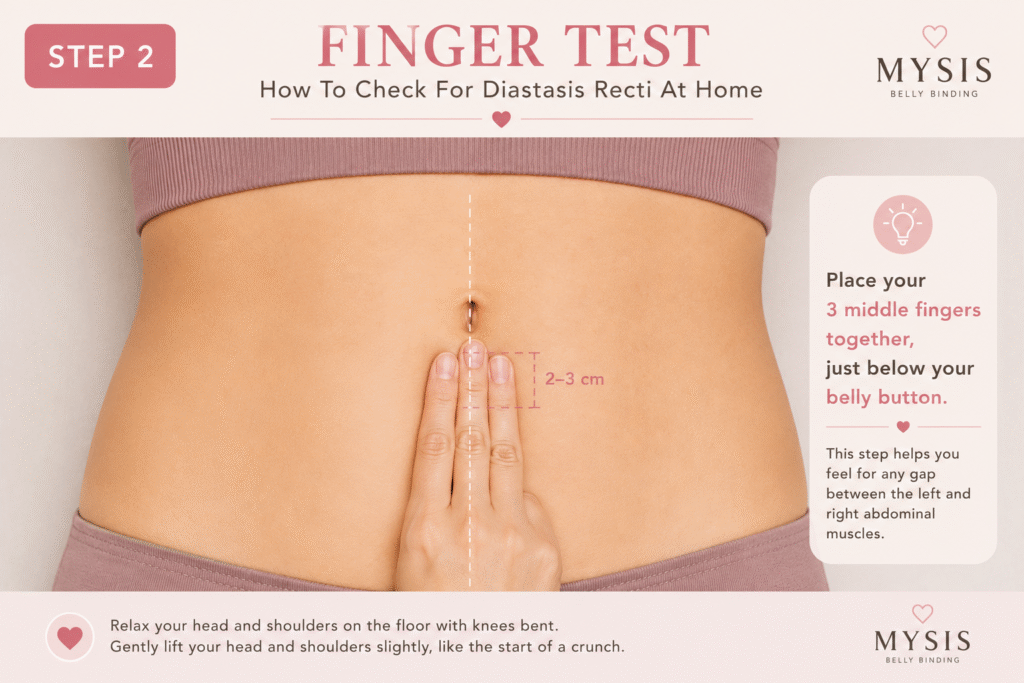
Step 2
Place your fingertips along the midline of your abdomen, starting around the belly button.
Step 3
Gently lift your head and shoulders slightly off the floor, similar to the beginning of a crunch.
Step 4
Feel for any gap between the two sides of the abdominal muscles.
Some mothers may notice a wider gap, while others may feel a softer area along the midline.
Repeat the check around the belly button and at points above and below it, as separation may vary along the abdominal wall.
Remember that this self-check is only a screening tool and does not provide a complete picture of abdominal wall function.
Why Gap Width Is Not The Only Thing That Matters
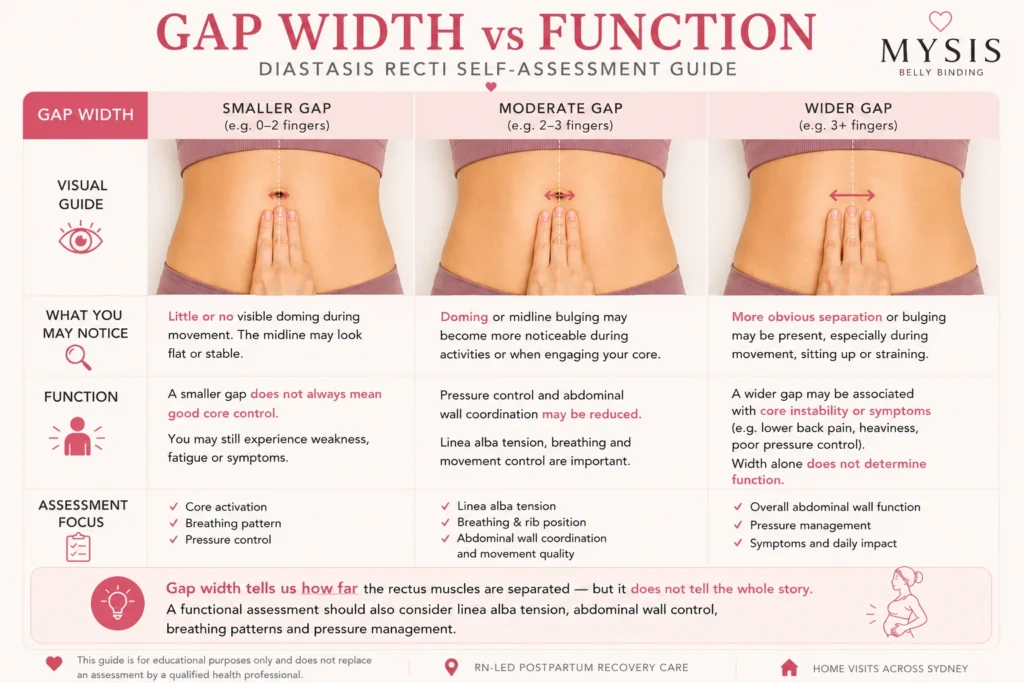
One of the biggest misconceptions about Diastasis Recti is that the width of the gap is the only thing that matters.
In reality, recovery is often influenced by several factors including:
✓ Abdominal wall tension
✓ Core muscle coordination
✓ Breathing patterns
✓ Pressure management during movement
✓ Overall abdominal function
Two mothers may have a similar gap width but experience very different levels of strength, support and function.
This is why modern postpartum recovery focuses on how the abdominal wall functions rather than looking at gap width alone.
Can Diastasis Recti Improve Naturally?
For many women, some improvement occurs naturally during the first months after birth.
However, recovery can vary significantly depending on factors such as:
- Individual healing
- Pregnancy history
- Activity levels
- Breathing habits
- Core muscle function
Some mothers notice continued improvement over time, while others may continue to experience symptoms that benefit from targeted recovery strategies.
When Should You Consider A Professional Assessment?
If you continue to experience:
✓ Persistent abdominal bulging
✓ Doming during movement
✓ Difficulty engaging your core
✓ Ongoing feelings of weakness or instability
A professional postpartum assessment may help identify factors contributing to these symptoms and provide guidance for recovery.
Assessment may include breathing patterns, abdominal wall tension, core activation, posture and overall movement strategies.
FAQ
Can I check Diastasis Recti myself?
A self-check can provide a general indication, but it cannot fully assess abdominal wall function, tension or movement patterns.
Does a larger gap mean worse Diastasis Recti?
Not necessarily. Gap width is only one factor. Abdominal wall tension, strength and function are also important considerations.
Can I have Diastasis Recti even if I look slim?
Yes. Some women may have Diastasis Recti despite having a relatively flat abdomen.
Not Sure Whether Your Core Is Recovering As Expected?
Every mother’s recovery journey is different.
Our RN-led postpartum assessment looks beyond gap width alone and considers breathing patterns, abdominal wall tension, core activation and overall recovery.
* Individual results may vary and do not replace medical advice.